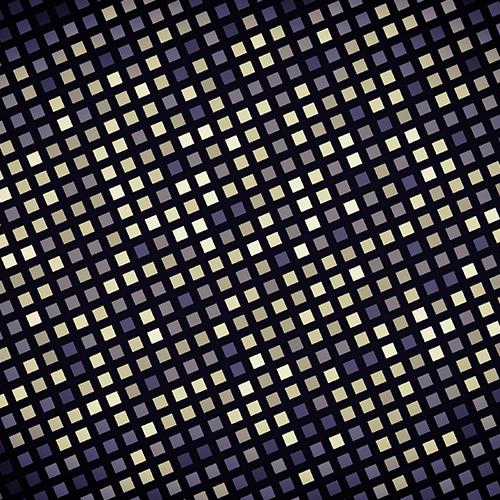
Eine schräge Linie mit einer Breite von einem Bildschirmpixel wird vermessen, um die Auflösung zu bewerten.
LMK Display Resolution – Reproduzierbare Auflösungsvermessung von Displays
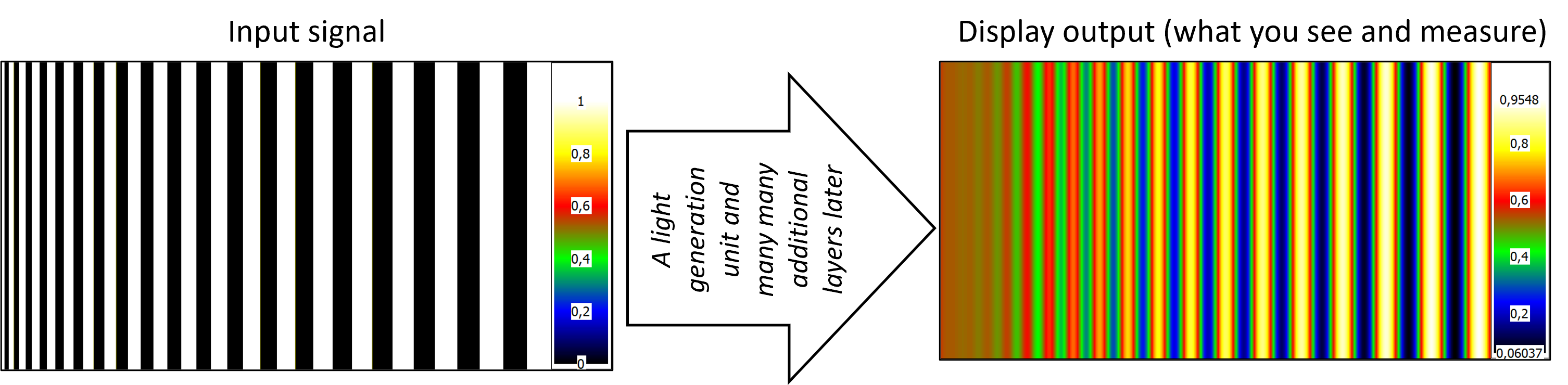
Zwei Methoden, ein Ziel: präzise Analyse der Displayauflösung
Das LMK Display Resolution Add-on ist Teil des Display Package und ermöglicht die Bewertung der effektiven Bildschärfe eines Displays im Vergleich zum Eingangssignal. Es wird verwendet, um den "Verlust an Bildschärfe" bzw. die wahrgenommene Auflösung zu charakterisieren. Das Paket beinhaltet zwei leistungsfähige Verfahren, welche auf Leuchtdichtemessungen mit hoher optischer Vergrößerung basieren: Pixel Crosstalk und Slanted Line MTF. Beide Algorithmen empfehlen wir für unterschiedliche Anwendungen.
BEIDE VERFAHREN IM VERGLEICH
Erfahren Sie mehr über Messbedingungen sowie die Vor- und Nachteile der einzelnen Verfahren in unserem Fachbeitrag (externer Link) oder nehmen Sie hier Kontakt für einen Beratungstermin auf.
Slanted Line MTF (IEC 62977-3-6)
Slanted Line MTF ist ein nach IEC 62977-3-6 standardisiertes Verfahren zur Bewertung des Auflösungsvermögens eines Displays. Die Bewertungsgrundlage folgt der Publikation „Line-Based Modulation Transfer Function Measurement of Pixelated Displays“ von K. Masaoka und basiert auf der bewährten ISO 12233, die zur Charakterisierung der MTF (Modulationsübertragungsfunktion) von optischen Elementen verwendet wird.
Eigenschaften der Methode
- Standardisiert nach IEC 62977-3-6
- Kalibrierung berücksichtigt Objektiv-MTF
- Geeignet für Flat-Panel Displays
- Abtastbedingung: Wir empfehlen mehr als 10 Kamerapixel pro Displaypixel
- Bei virtuellen Bildern nur bedingt geeignet
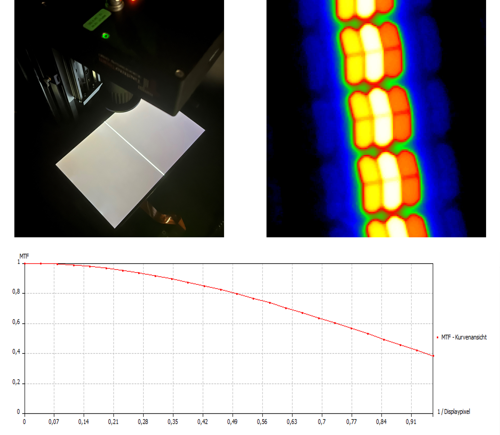
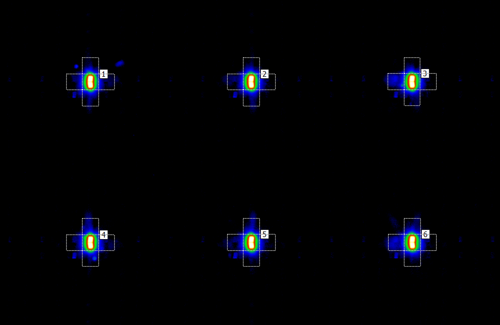
Einzelne Display-Pixel werden zur Auswertung der Auflösung verwendet
Pixel Crosstalk
Pixel Crosstalk bewertet die Auflösung durch Analyse des Streuprofils einzelner Displaypixel. Der Crosstalk wird in Prozent in vertikaler und horizontaler Richtung sowie über das gesamte Sichtfeld berechnet. Es basiert auf der Publikation Pixel Crosstalk: A New Metric to Characterize DOI Loss Due to AG Treatments of Display Glasses.
Eigenschaften der Methode
- Ideal für virtuelle Bilder wie HUDs und AR/VR
- Erfordert mindestens 30 Kamerapixel pro Displaypixel
- Nicht geeignet für unregelmäßige Subpixel-Layouts
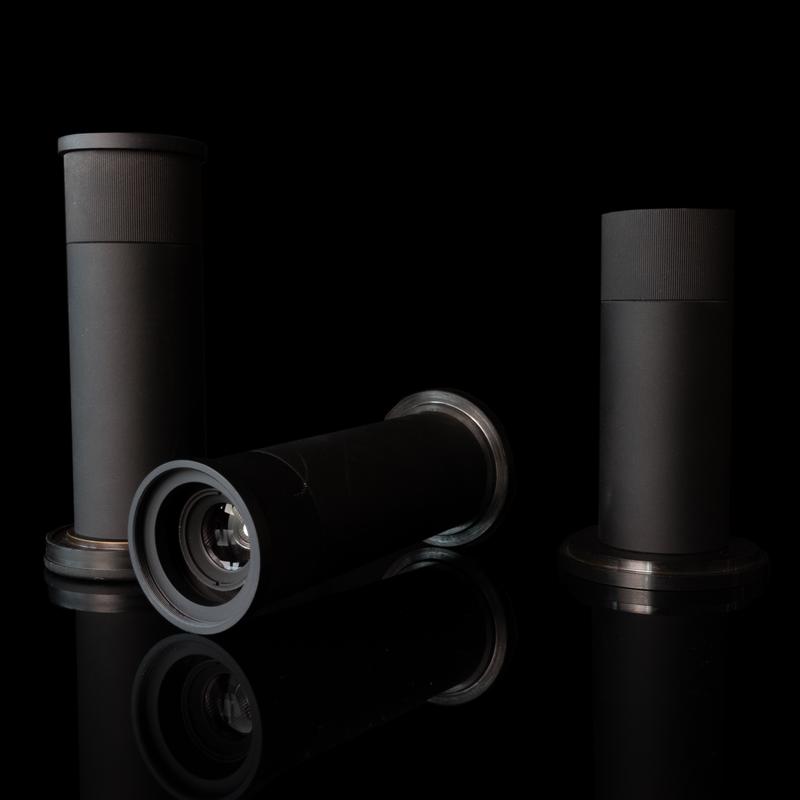
Objektivwahl für Auflösungsmessungen
Je nach Displaytyp kommen unterschiedliche Objektive zum Einsatz:
- Standarddisplays: (z. B. Smartphones, Laptops, Monitore): Makro-Objektive mit 0,5–2× Vergrößerung
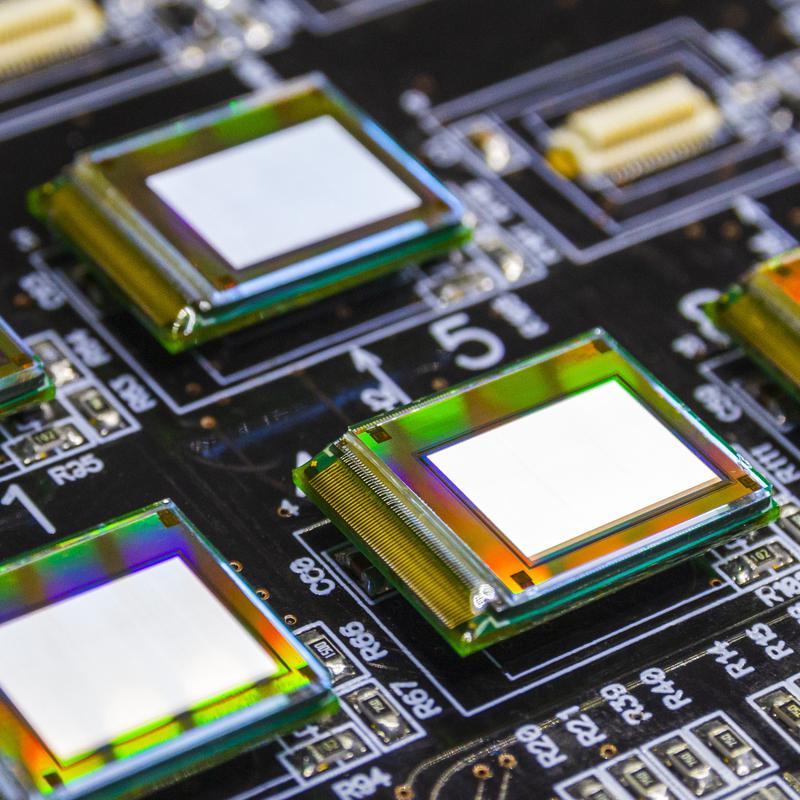
- Mikrodisplays: Mikro-Objektive mit 5–20× Vergrößerung
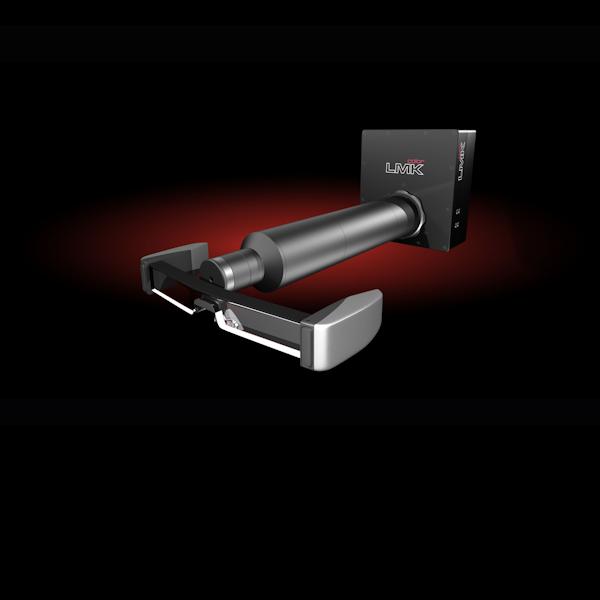
- Near-Eye-Displays (NED): Spezielle NED-Objektive mit kleinem Sichtfeld
RELEVANTE PRODUKTE UND ANWENDUNGEN


Downloads
Publikationen
Invited Paper: Reproducible Characterization of Microdisplays using Imaging Luminance Measurement Devices (ILMDs)
International Conference on Display Technology (ICDT 2024)
In this contribution, we present typical practical implications of high magnification lenses required for camera-based microdisplay measurements and analyze their impact on existing measurement methods for DeMURA, resolution and contrast. Furthermore, we show hardware and software-based methods to improve or handle the shortcomings of these high-magnification lenses.
Reproducibility Evaluations and Calibration Sensitivity of Slanted Line Display MTF Measurements in Oversampling Conditions
International Display Workshop (IDW 2023)
In this contribution we research calibration related impacts on
MTF measurements using the Slanted Line approach in
oversampling conditions. Based on this we propose a
simplified workflow of the Slanted Line MTF method and
conclude benefits and limitations of these setup conditions
MTF measurements using the Slanted Line approach in
oversampling conditions. Based on this we propose a
simplified workflow of the Slanted Line MTF method and
conclude benefits and limitations of these setup conditions
Resolution Capability Measurements: A Comparison Between MTF Slanted Line and Pixel Crosstalk
Society for Information Display 2023
In this contribution, we qualitatively and quantitively compare the recently proposed slanted line MTF resolution measurement with the established pixel crosstalk resolution measurement. This is done by comparing evaluation results and reproducibility from measurements of nine different samples in three different setups for each method.
Reproducibility and Sensitivity Experiments of Display-MTF using ILMDs with Fixed Focus Macroscopic Lenses
Eurodisplay 2022
This contribution uses the recently proposed Slanted Line approach to evaluate the MTF of a display as a measure of display resolution. It investigates the sensitivity for macroscopic imaging conditions and compares the reproducibility between four different macroscopic lenses using three different ILMDs. The samples consist of two displays combined with different structured top layers, which negatively affect the perceived resolution of the displays.
Pixel Crosstalk: A New Metric to Characterize DOI Loss Due to AG Treatments of Display Glasses
SID International Symposium 2016
A method is proposed that characterizes the loss of image clarity caused by anti-glare coatings. The method uses high resolution imaging, giving a distribution of scattered light that can be related easily to the clarity impression of the human eye. Results of different AG treated cover glasses are shown and a new parameter is proposed to characterize the loss of image clarity. This can be applied to the specification and characterization of the cover glasses as well as the characterisation of the final product for quality assurance.
Image Blurring Induced by Scattering Anti-Glare Layers
SID International Symposium 2016
We introduce the scattering-induced spreading of a narrow linear light source in transmission as an alternative method for characterization of image blurring induced by anti-glare layers. This novel method is compared to the recently presented concept of pixel crosstalk and to the transmissive scatter distribution function of anti-glare layers measured in two different ways. The reduction of transmittance modulation is presented as an additional method for characterization of image blur. The ranking of the results is compared to a generalized haze level of the AG samples as obtained from the transmittance distribution functions measured with two different methods.
- Typ:
- Add-On
- Anwendungen:
- Automotive Display
- Messgröße:
- Lichtmessung
- Aufgaben:
- Entwicklung & Industrie